
If a potential customer searches for your business right now and cannot find you online, you have already lost that sale. This guide walks you through every step of building a strong online presence from the ground up, including the parts most guides forget to mention.
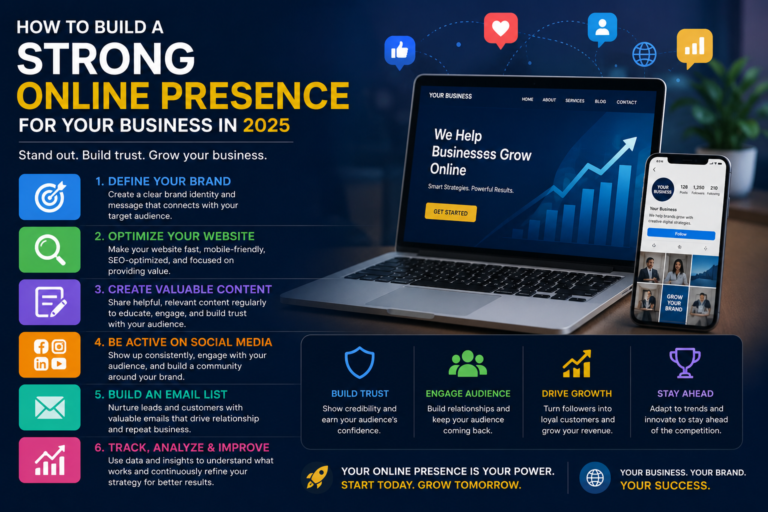
More than 97 percent of consumers search online before making a purchasing decision. Whether someone needs a plumber, a financial advisor, a restaurant, or a software tool, the first thing they do is open Google or a social platform and search. If your business does not appear in those results, you are invisible to them. Having an online presence is no longer something you can put off. It is the difference between a business that grows steadily and one that struggles to find new customers. The good news is that building a strong online presence is a skill, and it follows a clear set of steps that any business can follow regardless of size or budget. Businesses with a complete and active online presence receive up to 7 times more visits than those without one. Even small improvements to your digital footprint can produce significant results within 90 days.
Before you create a website or social media account, you need to know who you are as a business. Your brand identity is the foundation of everything you build online. Without it, your website looks inconsistent, your social posts feel random, and your audience cannot tell what makes you different from your competitors.
Write down in one or two sentences what your business does, who it serves, and what problem it solves. This becomes the guiding message for all your online content. Next, describe your ideal customer. How old are they, what do they care about, where do they spend time online, and what language do they use when searching for a service like yours.
Choose a logo, a color palette of two to three colors, and a consistent font. Use these across your website, your social media profiles, and any materials you publish. Consistency builds recognition. When someone sees your business three different times in three different places and it looks the same every time, trust builds naturally. Your tone of voice matters just as much as your visuals. A law firm and a yoga studio should not sound the same online. Decide whether your business speaks in a formal, friendly, expert, or casual tone and stick to it everywhere.
Your website is the most important piece of your online presence. Every other channel you use, whether that is social media, email, or advertising, should point people back to your website. Think of it as your home base on the internet. Choose the Right Platform For most small businesses, WordPress offers the most flexibility and long term control. Wix and Squarespace are easier to set up and work well for service businesses or portfolio sites. Shopify is the best option if you are selling products online. Choose based on what your business needs today and what it will need as it grows.
Your homepage should immediately communicate what you do and who you serve. A visitor should understand your business within five seconds of landing on your page. Include a clear headline, a short description of your service, and a visible call to action such as a contact form, a booking button, or a phone number. Beyond the homepage, your website needs a services or products page, an about page that builds trust, a contact page, and a blog section where you can publish helpful content regularly. Every page should have your contact information easy to find.
More than 60 percent of all web traffic now comes from mobile phones. If your website is slow or difficult to use on a phone, visitors will leave within seconds and find a competitor instead. Use Google’s free PageSpeed Insights tool to check how your website performs and follow its recommendations to improve load times. Google uses mobile performance as a direct ranking factor. A website that loads slowly on phones will rank lower in search results regardless of how good your content is. Aim for a load time under three seconds.
If you have the time and willingness to learn, platforms like Wix or Squarespace allow you to build a professional looking website yourself for a monthly fee of around 15 to 30 dollars. If your business is in a competitive market or you need custom features, hiring a web designer typically costs between 800 and 5,000 dollars for a complete site. The investment usually pays for itself quickly through increased leads.
SEO stands for Search Engine Optimization. It is the practice of making your website appear higher in Google search results when people search for what you offer. The higher you appear, the more visitors you get, and the more customers you win. Unlike paid advertising, SEO keeps working for you long after you put in the initial effort.

Keywords are the exact words and phrases people type into Google when they are looking for a business like yours. For example, if you run a cleaning company in Chicago, your customers are likely searching for things like house cleaning service Chicago or affordable cleaning company near me. Use free tools like Google Keyword Planner or Ubersuggest to find these phrases and then use them naturally in your website content, page titles, and descriptions.
This is one of the highest impact steps a local business can take and most businesses either skip it or do it poorly. Your Google Business Profile is the listing that appears in Google Maps and in the local results section at the top of search pages. Claim your profile at business.google.com, fill out every single field, add your opening hours, upload at least 10 photos, and write a clear description of your services using your target keywords. Businesses with complete Google Business Profiles are more than twice as likely to be considered reputable by customers. Update your profile regularly with posts, new photos, and responses to reviews. Google rewards active profiles with higher placement in local results.
Google evaluates websites based on what it calls E-E-A-T, which stands for Experience, Expertise, Authoritativeness, and Trustworthiness. To improve your score on these factors, include an author bio on your blog posts, show your real business address and phone number on your website, earn links from other reputable websites that mention your business, and collect genuine reviews from your customers.
Content is how you prove your expertise online. When you regularly publish helpful articles, videos, or other resources that answer your customers questions, Google rewards you with higher rankings and potential customers trust you more before they ever contact you.
Evergreen content is content that stays useful and relevant for a long time. Instead of writing about news or trends that will be outdated in a month, write guides that answer common questions your customers ask every day. A plumber might write a guide on how to prevent pipes from freezing. A financial advisor might write an explanation of when to start saving for retirement. This type of content keeps bringing in visitors for years.
Consistency matters more than volume. Publishing one good article per week is more effective than publishing ten in a single month and then going quiet for two months. Create a simple calendar in a spreadsheet that maps out your topics for the next 90 days. Assign a publish date to each topic and stick to the schedule. Over time this creates a library of content that continuously earns traffic and builds your authority in your industry.
Artificial intelligence writing tools have changed how businesses create content. Tools like ChatGPT, Claude, and Jasper can help you generate first drafts, create outlines, repurpose long articles into social posts, and brainstorm new topic ideas in minutes. These tools do not replace your knowledge and expertise but they dramatically reduce the time it takes to produce consistent content. Use them as a starting point and then add your own insights and real examples to make the content genuine.
YouTube is the second largest search engine in the world. Millions of people search on YouTube for tutorials, product reviews, service explanations, and how-to guides. Short videos on YouTube and on Instagram Reels or TikTok can reach audiences that never find you through Google search. You do not need expensive equipment. A smartphone, decent lighting, and useful information is enough to start building an audience through video.
Social media is where your existing and potential customers spend a large part of their day. Being active on the right platforms keeps your business in front of people who are not yet ready to buy but will remember you when they are.
You do not need to be on every platform. Trying to maintain too many accounts at once leads to low quality content everywhere. Instead, choose one or two platforms where your specific audience is most active and focus your energy there. LinkedIn works best for professional services, B2B companies, and industries like finance, consulting, and technology. Instagram and Pinterest work well for visual businesses like restaurants, interior design, fashion, and beauty. Facebook is effective for local service businesses that want to reach homeowners and families. TikTok and YouTube work across industries when you are willing to invest in video content.
Every post should either teach your audience something, inspire them, answer a common question, show behind the scenes of your work, or feature a real customer story. Avoid posting just to fill a schedule. Two to three posts per week of genuine value will outperform seven posts per week of filler content every time.

What other people say about your business online carries more weight than anything you say about yourself. Before making a purchase or booking a service, the majority of consumers read online reviews. Your reputation on platforms like Google, Yelp, and industry specific directories can make or break a sale.
Most satisfied customers will not leave a review unless you ask them. After completing a job or delivering a product, send a simple follow up message asking your customer if they were happy with their experience and, if so, if they would mind leaving a quick review on Google. A direct link to your Google review page makes this as easy as possible for them. Aim to collect at least two to three new reviews every month to keep your profile fresh and active.What other people say about your business online carries more weight than anything you say about yourself. Before making a purchase or booking a service, the majority of consumers read online reviews. Your reputation on platforms like Google, Yelp, and industry specific directories can make or break a sale.
Thank customers who leave positive reviews. It shows you are engaged and appreciative. When you receive a negative review, respond calmly and professionally. Acknowledge the issue, apologize if appropriate, and offer to resolve it offline. Potential customers who see a business handle criticism with professionalism are often more impressed than those who see only perfect reviews.
Set up a free Google Alert for your business name so you are notified whenever someone mentions you online. Check your reviews on Google and any relevant industry directories at least once a week. Staying on top of what is being said allows you to respond quickly and protect your reputation before a small issue grows into a larger problem.
Email marketing consistently delivers the highest return on investment of any digital marketing channel. Unlike social media where your reach depends on an algorithm, your email list is an audience you own and can reach directly anytime you choose.
Add an email signup form to your website and offer something in return for subscribing. This is called a lead magnet. It could be a free guide, a discount code, a checklist, a template, or access to a free resource that your ideal customer would find genuinely useful. Even a simple monthly newsletter that curates useful tips in your industry gives people a reason to subscribe.
Send a welcome email immediately when someone subscribes. Then communicate on a regular schedule, whether weekly or monthly, and make every email genuinely useful. Share tips, answer common questions, update subscribers on what you are working on, or highlight customer success stories. Keep your emails focused and short. Most successful small business emails are between 300 and 600 words and include one clear call to action. Mailchimp offers a free plan for up to 500 subscribers. ConvertKit and MailerLite are also excellent options for small businesses just getting started with email marketing. All three allow you to set up automated welcome sequences without any technical experience.
Building an online presence without measuring your results is like driving without a destination. You need to know what is working and what is not so you can focus your time and energy on the activities that actually move your business forward.
Install Google Analytics 4 on your website. It is free and gives you detailed information about how many people visit your site, where they come from, which pages they read, and whether they take action. Also connect your website to Google Search Console, another free tool that shows you exactly which search terms people used to find your site and whether your pages have any technical issues affecting your rankings.
Keep an eye on your monthly website visitors and whether that number is growing. Track how many visitors come from organic search compared to social media or direct visits. Monitor your Google Business Profile for how many people viewed it, clicked to call, or asked for directions. Check your social media platforms for reach and engagement rates. Review your email open rates and click rates. These numbers together tell you a clear story about the health of your online presence.
Once a month, spend one hour reviewing your performance across all channels. Ask yourself which piece of content got the most engagement, which social platform drove the most website traffic, and what your top reviewed search terms were. Use those answers to shape your content plan for the following month. This simple habit is what separates businesses that grow their online presence steadily from those that stay stuck.

Creating profiles on every platform and then posting occasionally on all of them produces almost no results. It is far better to be genuinely active on two platforms than barely visible on six.
Your website needs regular updates. Add new content, update your services, refresh your photos, and check that everything still works correctly at least every three months. Google favors websites that are regularly maintained and updated.
If your website is not optimized for phones, you are losing a majority of potential visitors before they ever read a single word you have written.
Happy customers rarely leave reviews on their own. Make asking for a review a normal part of your follow up process after every completed job or purchase.
Random content posted at random times produces random results. Even a basic content calendar planned one month in advance will make your social media and blog significantly more effective.
If you do not measure what you are doing, you cannot improve it. Setting up Google Analytics takes less than 30 minutes and gives you information that will help you make smarter decisions every month going forward.
If your website, social profiles, and emails all look and sound different from each other, your business appears unprofessional and untrustworthy. Consistent branding is the invisible thread that holds everything together and makes your business memorable.
Finalize your brand identity including your logo, colors, and tone of voice. Build or redesign your website so it is fast, mobile friendly, and clearly communicates what you offer. Claim and fully complete your Google Business Profile. Set up Google Analytics and Google Search Console.
Publish your first four blog posts targeting keywords your customers search for. Create or clean up your chosen social media profiles and begin posting three times per week. Ask your last ten customers to leave a Google review. Set up a basic email newsletter and add a signup form to your website.
Continue publishing content consistently. Review your Google Analytics data and identify which content or channels are bringing in the most traffic. Run a small paid advertising test on either Google or your top social platform. Set a monthly habit of reviewing your key metrics and adjusting your plan based on what the data shows. Building a strong online presence is not about doing everything perfectly from day one. It is about showing up consistently, learning from your results, and improving over time. Businesses that commit to this process for six months or more see compounding results that continue to grow long after the initial work is done.
For organic SEO, most businesses begin seeing meaningful results within four to six months of consistent effort. Social media can build an engaged following within two to three months. Paid advertising can drive traffic within days but requires ongoing budget. The key is to start now because every month you delay is a month of compounding results you do not get.
You can start for very little using free tools. A realistic budget for a small business includes website hosting at 15 to 30 dollars per month, an SEO tool at around 30 to 50 dollars per month, and an email marketing platform which is free up to 500 subscribers. A full service agency managing everything for you typically costs between 500 and 3,000 dollars per month.
Optimizing your Google Business Profile gives local businesses the fastest return on investment. A complete and active profile puts you directly in front of people searching for your service in your area, often before your website even ranks in search results.
No. Choose one or two platforms where your target customers are most active and invest your energy there. Being consistent and valuable on two platforms will always outperform being scattered across five or six platforms where you post irregularly.
Yes, especially in the early stages. The most important tools you need, including Google Search Console, Google Analytics, Google Business Profile, and Mailchimp's free tier, are all free. With consistent effort and a clear plan, many small business owners successfully build their own online presence before eventually bringing in professional help to scale further.
Building a strong online presence is one of the most valuable investments your business can make. It works for you around the clock, brings in customers who are actively looking for what you offer, and builds the kind of trust that no single advertisement can buy. Start with your foundation. Get your brand identity clear, build a website that converts, and optimize your Google Business Profile. Then layer in content, social media, reviews, and email marketing over time. Measure your results monthly and keep improving. The businesses that dominate online are not the ones with the biggest budgets. They are the ones that show up consistently, serve their audience genuinely, and never stop improving. That is a game every business can play and win.